
Disclosure: This post contains Amazon affiliate links. We may earn a small commission if you buy through our links — at no extra cost to you.
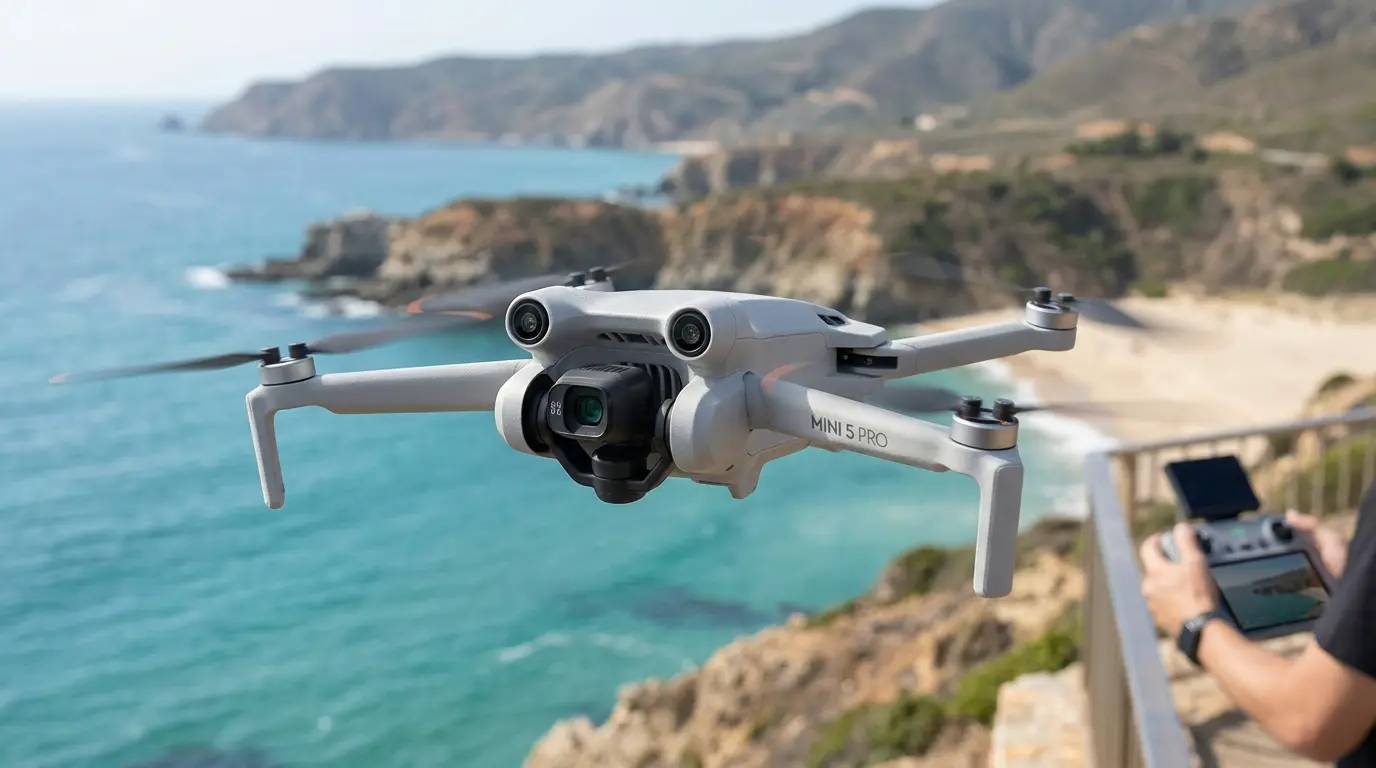
The DJI Mini 5 Pro has changed what a small drone can do.
For the first time, you get a 1-inch camera sensor in a drone that weighs under 250 grams. That’s a huge deal. Previously, that sensor size was only available on much bigger — and much more expensive — drones.
But is it worth the price? And is it really the best camera drone for beginners in 2026?
We’ve gone through all the real-world testing data, expert reviews, and user feedback. In this review, we give you everything you need to decide.
Quick Verdict
The DJI Mini 5 Pro is the best compact drone you can buy right now. It delivers professional-quality video, advanced safety features, and incredible portability — all in one package.
However, it’s not perfect. Battery life falls short of DJI’s claims. Also, some units weigh slightly over 250g, which may require registration in your country.
Best for: Beginners who want pro-quality footage. Travel creators. Anyone upgrading from an older Mini drone.
Not ideal for: Pilots on a tight budget. Anyone who needs multiple camera lenses. Buyers looking for the longest possible flight time.
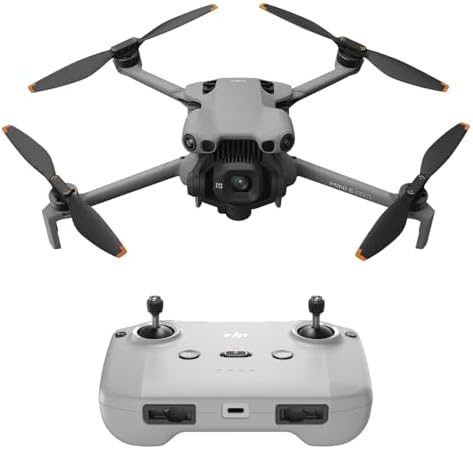
- Ultra-Light, Palm-Sized Foldable Design – Compact and foldable, this palm-sized drone slips easily into a pocket and off…
- 1-Inch CMOS With 4K/60fps HDR Video – 1-inch CMOS sensor captures 4K/60fps HDR video with sharp detail and vibrant color…
- True Vertical Filming & 225° Flexible Gimbal Rotation – Capture creative footage with a gimbal that offers true vertical…
DJI Mini 5 Pro: Key Specs at a Glance
| Spec | Detail |
|---|---|
| Weight | 249.9g ±4g (standard battery) |
| Camera Sensor | 1-inch CMOS, 50MP |
| Video | 4K/60fps HDR, 4K/120fps slow-mo |
| Dynamic Range | Up to 14 stops |
| Color Profiles | D-Log M, HLG, Normal |
| Gimbal Rotation | 225° roll — True Vertical Shooting |
| Obstacle Avoidance | Omnidirectional + front LiDAR |
| Battery Life (claimed) | 36 min (standard), 52 min (Plus) |
| Battery Life (real-world) | 20–25 min (standard), 38–45 min (Plus) |
| Internal Storage | 42GB built-in |
| Max Range | 13 miles (standard battery) |
| Wind Resistance | Level 7 |
| Max Speed | 57 km/h |
| Price (drone only) | ~$759 |
| Price (Fly More Combo) | ~$910 |
⚠️ Price verified on Amazon — May 2026. Always click through for the latest deal.
Design & Build: Small Enough to Fit in Your Jacket
The DJI Mini 5 Pro folds down to just 157mm × 95mm × 68mm.
That’s smaller than most smartphones. You can genuinely carry it in a jacket pocket. So it’s perfect for travel, hikes, and spontaneous shoots.
The build quality is solid plastic — exactly what you’d expect from DJI. However, nothing feels cheap. Everything clicks and locks into place with confidence.
A Smarter Propeller Design
One improvement beginners will love is the new propeller system. Previously, you needed a screwdriver to replace propellers. Now, you simply push, twist, and lock. That’s it. This makes field repairs fast and frustration-free.
Weight — The One Thing to Know Before You Buy
The DJI Mini 5 Pro officially weighs 249.9g. This keeps it under the critical 250g registration threshold in most countries — including the USA and EU.
However, there’s an important caveat. DJI’s published spec is 249.9g ±4g. Some units have measured slightly over 249g, which technically triggers FAA registration in the US. This isn’t a defect — it’s a known manufacturing tolerance. However, it’s worth knowing before your first flight.
Also, using the Intelligent Flight Battery Plus pushes the total weight over 250g. So if you use the Plus battery, registration is required regardless of where you live.
Camera Performance: The Biggest Upgrade in Mini History
This is why most people are buying the Mini 5 Pro. The camera is extraordinary for a drone this size.
A 1-Inch Sensor — First Ever on a Mini Drone
The Mini 5 Pro boasts a larger 1-inch CMOS sensor. The bigger sensor means you get improved low-light performance with reduced noise and a wider dynamic range. This is the largest sensor on a mini drone yet.
In plain terms: your footage will look dramatically better than with any previous Mini drone. Especially in low light.
Stunning 4K Video Quality
The Mini 5 Pro shoots 4K at 60fps with HDR support. It also shoots 4K at 120fps for smooth slow-motion footage. Both modes look incredible.
It supports 4K/60fps HDR and 4K/120fps slow-motion, with up to 14 stops of dynamic range in auto mode.
That dynamic range is key. It means the camera holds detail in both bright highlights and dark shadows at the same time. Sunsets, forests, and urban shots all benefit enormously.
Low-Light Performance: A Game-Changer
This is where the 1-inch sensor earns its price. There’s a bump of about 20–30% in low-light performance when comparing the Mini 5 Pro directly to the Mini 4 Pro. Dynamic range has also significantly improved.
Practically, this means golden-hour shots and dusk footage that previously required heavy editing now look great straight out of the camera.
50MP Photos — Professional Quality Stills
The Mini 5 Pro shoots 50-megapixel RAW photos. That gives you enormous flexibility in post-processing. You can crop significantly without losing detail. You can get professional results from the Mini 5 Pro sensor, especially if you know how to use manual camera settings.
225° Gimbal — Creative Shots No Other Mini Can Do
The gimbal rotates 225 degrees on the roll axis. This enables two things:
First, True Vertical Shooting — recording natively in portrait format for Instagram Reels and TikTok. No cropping, no quality loss. Just native 9:16 footage straight from the sky.
Second, barrel roll-style cinematic shots — borrowed from the larger Mavic 3. These dramatic angles were simply impossible on any previous Mini drone.
Flight Performance: Confident, Stable, and Safe
The Mini 5 Pro flies better than any previous Mini drone. Here’s what you’ll notice immediately.
LiDAR Obstacle Avoidance — A First for Mini Drones
One of the major new features is the forward-facing LiDAR sensor — a first on such a compact drone. This sensor measures distance to objects via laser pulses, enabling it to operate even in low-light conditions, where optical cameras reach their limits.
This is a genuine safety leap. Previous obstacle avoidance systems couldn’t work in darkness. LiDAR can. So night flights and low-light environments are safer than ever.
In addition, the omnidirectional optical sensors cover all directions. Together with LiDAR, omnidirectional obstacle sensing, backed by LiDAR and advanced processing, enhances safety and precision.
Smarter Return-to-Home
DJI has included intelligent RTH, now capable of operating even without GPS. On takeoff, the drone visually records its immediate surroundings, enabling it to find its starting point autonomously if the GPS connection is lost.
This is particularly valuable in forests, urban canyons, and areas with signal interference. It’s a significant safety upgrade over the Mini 4 Pro.
Wind Resistance and Speed
The Mini 5 Pro handles wind better than its predecessor. Top flight speeds and wind resistance are 10% better than the Mini 4 Pro’s, while ascent speed is doubly fast.
In practice, you’ll still feel wobble in strong winds — it’s a lightweight drone at the end of the day. However, the 3-axis gimbal compensates well. Footage stays smooth even when the drone itself is rocking.
Waypoint Flight — A Big-Drone Feature, Now in the Mini
Waypoint Flight, a feature once reserved for larger drones, enables programmable routes and repeatable camera paths — a huge plus for creators who need consistent shots over time.
This is ideal for real estate photography, landscape timelapses, and any project where repeatable paths matter.
ActiveTrack 360 — It Follows You Everywhere
The Mini 5 Pro’s tracking system is called ActiveTrack 360. It keeps a moving subject locked in frame — even while dodging obstacles.
The Mini 5 Pro easily handled a stern test of tracking a subject running through a woodland, navigating overhanging branches along the way.
That’s impressive for a drone this size. Beginners will love it for solo shoots and adventure content.
Battery Life: The Honest Truth
This is the most important thing to know before you buy. DJI’s advertised battery life and real-world battery life are quite different.
What DJI Claims vs. What Pilots Actually Get
| Battery | DJI Claimed | Real-World Average |
|---|---|---|
| Standard (2,788 mAh) | 36 minutes | 20–25 minutes |
| Plus battery | 52 minutes | 38–45 minutes |
The real-world numbers come from multiple independent testers. DJI claims 36 minutes of flight with the standard battery, but in real-world use shooting at 4K/60fps, ActiveTrack running, and a bit of wind, the average is closer to 20–25 minutes.
Philip Bloom reported 23–24 minutes. Billy Kyle got 25–30 minutes. Nobody consistently hits 36 minutes in active shooting conditions.
What Does This Mean for You?
20–25 minutes is still enough for most beginner shoots. However, you’ll feel the pressure on longer sessions.
Our strong recommendation: get the Fly More Combo. It comes with two extra batteries, a multi-battery charging hub, and ND filters. Three batteries in total gives you 60–75 minutes of real flying time. That’s enough for a full creative session.
The Plus battery is also worth considering. In real flying conditions with wind and active photography, expect roughly 38–45 minutes on the Plus battery. That’s a significant upgrade — though it pushes the drone over 250g.
Internal Storage: Massively Improved
The Mini 5 Pro has 42GB of built-in internal storage. That’s a massive improvement. For context, the Mini 4 Pro had just 2GB.
Internal storage has received a massive upgrade — 42GB versus a measly 2GB on the Mini 4 Pro.
In practical terms, 42GB holds roughly 45 minutes of 4K/60fps footage. There’s also a microSD card slot for extra storage when you need it.
DJI Mini 5 Pro vs DJI Mini 4 Pro
Upgrading from the Mini 4 Pro? Here’s how the two compare.
| Feature | Mini 5 Pro | Mini 4 Pro |
|---|---|---|
| Sensor | 1-inch CMOS, 50MP | 1/1.3-inch, 48MP |
| 4K Slow-Motion | 4K/120fps | 4K/100fps |
| Gimbal Rotation | 225° | 80° |
| LiDAR | ✅ Yes | ❌ No |
| Internal Storage | 42GB | 2GB |
| Real Battery Life | 20–25 min | ~20 min |
| Waypoint Flight | ✅ Yes | ❌ No |
| Price | ~$759 | ~$579 |
The sensor upgrade is the headline difference. But LiDAR obstacle avoidance, Waypoint Flight, and 42GB internal storage are also genuinely meaningful upgrades. If you shoot in low light frequently, the Mini 5 Pro is a clear step up.
Pricing & Bundles: Which Version Should You Buy?
The DJI Mini 5 Pro comes in several configurations. Here’s a simple breakdown.
| Bundle | What’s Included | Price |
|---|---|---|
| Drone Only (RC-N3) | Drone + RC-N3 controller | ~$759 |
| Fly More Combo (RC-N3) | Drone + 3 batteries + hub + bag + ND filters | ~$979 |
| Fly More Combo (RC 2) | Same + upgraded controller with screen | ~$1,109 |
Which should you choose?
For most beginners, the Fly More Combo with RC-N3 is the best value. You get three batteries, a charging hub, a carrying bag, and ND filters — all essential for serious flying. The RC 2 controller adds a built-in screen, which is useful but not essential.
The RC 2 controller is worth the extra cost if you fly in bright sunlight frequently. Its built-in screen is far easier to see outdoors compared to using your phone.
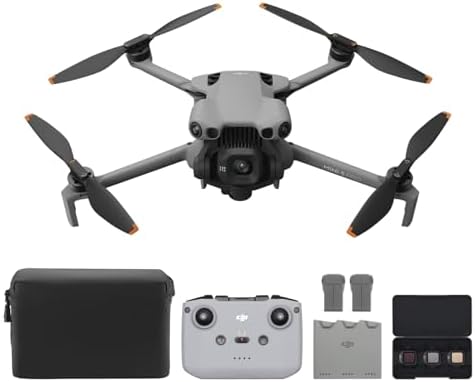
- Ultra-Light, Palm-Sized Foldable Design – Compact and foldable, this palm-sized drone slips easily into a pocket and off…
- 1-Inch CMOS With 4K/60fps HDR Video – 1-inch CMOS sensor captures 4K/60fps HDR video with sharp detail and vibrant color…
- True Vertical Filming & 225° Flexible Gimbal Rotation – Capture creative footage with a gimbal that offers true vertical…
Who Should Buy the DJI Mini 5 Pro?
Buy it if:
- You want the best camera quality in a portable drone
- You film in low light, at golden hour, or in challenging conditions
- You shoot for social media and want native vertical 9:16 footage
- You’re upgrading from a Mini 2, Mini 3 Pro, or Mini 4 Pro
- You travel frequently and need a regulation-friendly sub-250g drone
Look elsewhere if:
- Budget is tight — consider the DJI Mini 4 Pro (~$579) instead
- You need multiple focal lengths — look at the DJI Air 3S with dual cameras
- You want the longest possible battery life — larger drones like the Mavic 4 Pro fly longer
- You primarily fly in very strong winds — larger drones handle wind much better
Our Verdict
🚁 MesterDeals Score: 9.3 / 10
The DJI Mini 5 Pro is the best beginner drone of 2026. It’s also the best compact drone DJI has ever made.
The 1-inch sensor produces footage that rivals drones twice its size. LiDAR obstacle avoidance makes it safer to fly in tricky spots. The 225° gimbal unlocks creative angles no previous Mini could achieve. And 42GB of internal storage means you’re rarely scrambling for space.
The battery life shortfall is a real limitation. Real-world flights average 20–25 minutes — not the 36 minutes DJI advertises. However, the Fly More Combo solves this almost completely with three batteries and a fast charging hub.
The Mini 5 Pro is easily the best drone for most people, and an excellent tool in any creator’s arsenal. We agree completely.
✅ Pros
- First sub-250g drone with a 1-inch sensor
- 4K/60fps HDR and 4K/120fps slow-motion video
- 20–30% better low-light performance than Mini 4 Pro
- LiDAR obstacle avoidance works in near-darkness
- 225° gimbal enables True Vertical Shooting and creative angles
- 42GB internal storage — huge upgrade from Mini 4 Pro’s 2GB
- Waypoint Flight for repeatable, programmable routes
- Compact and portable — fits in a jacket pocket
- 4.6-star rating from nearly 600 Amazon reviews
❌ Cons
- Real battery life is 20–25 min — well below DJI’s 36-min claim
- Some units weigh slightly over 250g — may require registration
- Fixed f/1.8 aperture — ND filters are essential for video
- Single camera only — no zoom lens like the Air 3S
- Expensive — ~$759 for drone only; ~$979 for Fly More Combo
- Plus battery pushes weight over 250g, requiring registration
Frequently Asked Questions
Is the DJI Mini 5 Pro worth buying in 2026?
Yes — especially for beginners and travel creators. The 1-inch sensor, LiDAR obstacle avoidance, and 225° gimbal make it the most capable compact drone ever made. The battery shortfall is the main caveat. However, the Fly More Combo’s three batteries make this manageable. It holds a 4.6-star rating on Amazon from nearly 600 verified reviews.
How long does the DJI Mini 5 Pro battery really last?
DJI claims 36 minutes with the standard battery. In real-world conditions — shooting 4K/60fps with some wind — expect 20–25 minutes. The Plus battery gives 38–45 minutes in real use, though it pushes the drone over 250g. Always buy extra batteries if you plan serious shoots.
Does the DJI Mini 5 Pro need to be registered?
With the standard battery, the drone weighs 249.9g ±4g. Most units stay under 250g, avoiding mandatory registration in the US and EU. However, some units exceed 250g due to manufacturing variance — always weigh yours before flying. Using the Plus battery always pushes the drone over 250g, requiring registration regardless of where you live.
What is the difference between the DJI Mini 5 Pro and Mini 4 Pro?
The Mini 5 Pro has a significantly larger 1-inch sensor (vs. 1/1.3-inch), LiDAR obstacle avoidance (vs. optical only), a 225° gimbal (vs. 80°), 42GB internal storage (vs. 2GB), Waypoint Flight, and 4K/120fps slow-motion. The price difference is around $180. For frequent low-light shooters, the upgrade is well worth it.
Do I need ND filters for the DJI Mini 5 Pro?
For video, yes. The fixed f/1.8 aperture means you have no in-camera way to control shutter speed for natural motion blur in bright conditions. ND filters are essential for cinematic video work outdoors. The Fly More Combo includes ND8, ND16, and ND32 filters — a key reason to choose the combo over the drone alone.
Is the DJI Mini 5 Pro good for beginners?
Absolutely. The combination of LiDAR and omnidirectional obstacle avoidance makes it one of the safest drones to learn on. ActiveTrack 360 handles subject tracking automatically. Intelligent RTH works even without GPS. Beginners get professional results without needing professional-level flying skill.
What controller should I choose with the DJI Mini 5 Pro?
The RC-N3 controller uses your smartphone as a screen — great for most beginners. The RC 2 has a built-in screen that’s far easier to see in bright sunlight. If you fly outdoors in strong sunlight frequently, the RC 2 is worth the upgrade. For indoor or shaded use, the RC-N3 is perfectly capable.
Also read on MesterDeals:
- 🎮 Xbox Series X vs PS5 in 2026 — Which Console Should You Buy?
- 💻 Best Gaming Laptops Around $1,000 in 2026 — 7 Tested & Ranked
- 🎮 ASUS ROG Ally X Review — Best Handheld Gaming PC in 2026?
Last updated: May 2026 | MesterDeals.com Price verified on Amazon — always click through for the most current deal.